

our story
History of the Chib Rajputs
Six centuries of the Chibs: Katoch princes from Kangra, rajas of Bhimber on the road to Kashmir, and Muslim Rajputs who held their hills against empires.
The Chibs are a Rajput clan of the hills of Kashmir and the northern Punjab. Their shajra traces them to the Katoch rajas of Kangra, beginning with Rajanaka Bhumi Chandra. Megh Chand (Megh Chandra II), who fought against Timur, was the father of Raja Partab Chand, founder of Bhimber, and Partab Chand’s son Raja Chib Chand, Raja of Chibhal State, gave the clan its name. For more than four centuries the Chib rajas ruled the hill country of Chibhal from Bhimber, the town at the foot of the hills where the Mughal road to Kashmir began its climb.
Six generations after Chib Chand, Raja Shadab Khan, son of Raja Gor Paal Chand and also called Sandeep Chand or Raja Dharam Chand, embraced Islam. He is remembered today as Baba Shadi Shaheed, and historical records place his conversion in the early Mughal age. From then on the Chibs were Muslim Rajputs, loyal to the Mughal emperors and proud of their Rajput blood. When the Sikh kingdom of Lahore rose in the nineteenth century, Raja Sultan Khan, whom the shajra calls the last ruler of Bhimber, defended his country with great courage until he was betrayed, and with him the rule of the Chib rajas came to an end.
Today Chib families live throughout Bhimber, Mirpur and Kotli, in Gujrat and Jhelum, and in communities overseas, held together by faith, family and a shared history. The shajra of the Chibs of Malot, who descend from Darya Khan, son of Raja Madan Khan, can be explored on our Lineage page.
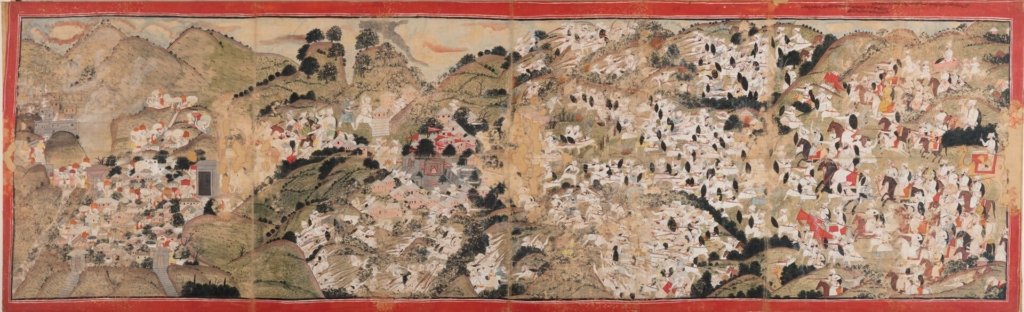
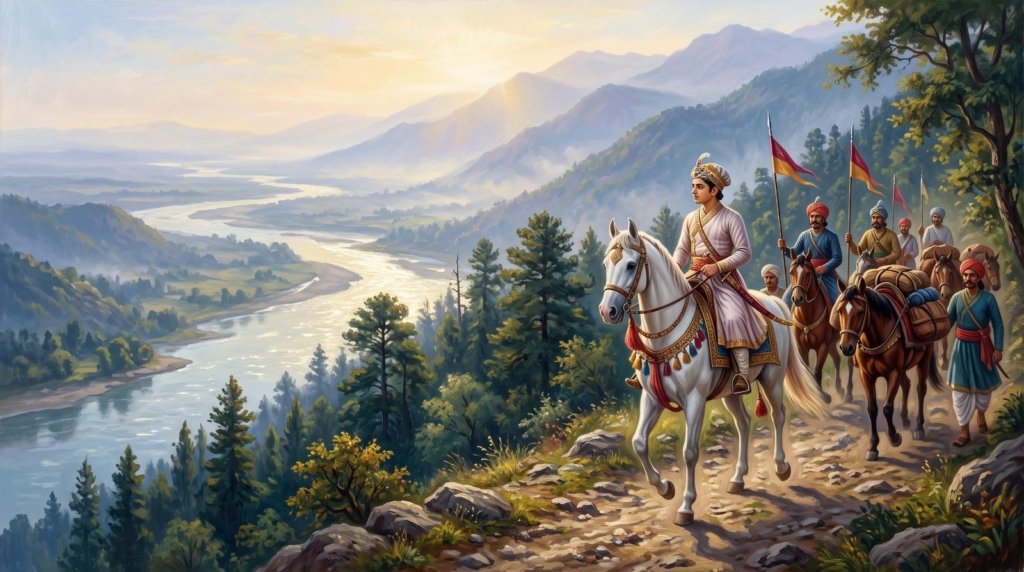

through the centuries
Timeline
Shajra from our family shajra Records from historical records
- c. 4300 BC Shajra Rajanaka Bhumi Chandra, founder of the Katoch line of Kangra, stands at the head of the Chib shajra.
- 1500 BC Shajra Susharma Chandra II fights against Arjun in the Mahabharata.
- 320 BC Shajra Parmanand Chandra I, known as Porus, fights against Alexander the Great.
- AD 643 Shajra Adam Chandra, a contemporary of Harsh Vardhan of Kanauj, is visited by the Chinese traveller Hiuen Tsang.
- AD 1009 Shajra Jagdish Chandra III fights against Mahmud Ghazni.
- AD 1375 Shajra Shringar Chandra IV issues the Singa coins and receives the title of Miyan.
- AD 1391 Shajra Megh Chand (Megh Chandra II) issues the Meghmudra coins and fights against Timur.
- c. 1400 ShajraRecords Megh Chand’s son Raja Partab Chand founds Bhimber (Chibhal), and his son Raja Chib Chand rules as Raja of Chibhal State; the clan takes its name from him. Historical records date this to around 1400 and say that Partab Chand, whom they call the third son, won Bhimber by marriage.
- AD 1405–1420 Shajra Megh Chand’s other sons: Hari Chandra I (1405) founds Guler, and Karm Chandra II (1420) receives the title of Bada Raja.
- 15th century Records Hutchison and Vogel name a younger son of Partab Chand, Kharak Chand, as the founder of Khari-Khariali, with its seat at Mangla Fort. He does not appear on our shajra, which follows the line of Chib Chand.
- 1486 Records Raja Hans of Bhimber defeats a force from the Punjab trying to enter Kashmir by way of Bhimber.
- Early 16th century ShajraRecords Raja Shadab Khan, son of Raja Gor Paal Chand and sixth in descent from Raja Chib Chand, embraces Islam. The shajra also calls him Sandeep Chand or Raja Dharam Chand, and he is remembered as Baba Shadi Shaheed; the date comes from historical records.
- 1586 Records Akbar brings Kashmir into the Mughal Empire, and Bhimber becomes the gateway on the imperial road from Lahore to Srinagar.
- 1627 Records Emperor Jahangir dies near Bhimber. His entrails are buried at Baghsar Fort.
- 1665 Records François Bernier passes through Bhimber in the train of Emperor Aurangzeb.
- 1752 Records Kashmir passes to the Durrani Afghans, and the rajas of Bhimber accept the new paramount power.
- Before 1810 Shajra The shajra traces the rajas of Bhimber from Ismail Khan, son of Raja Madan Khan and a descendant of Baba Shadi Shaheed through Raja Ghani Khan: Raja Chowk Jannat Khan, known as Raja Jogu Khan; Raja Rehmatullah Khan, known as Raja Roop Singh; Raja Karamullah Khan; Raja Shair Safdar Khan; Raja Mian Ji Khan; Raja Naeem Khan; Raja Suleman Khan; and Raja Sultan Khan.
- 1810 Records Maharaja Ranjit Singh sends his first force against Bhimber. Raja Sultan Khan resists, then pays tribute.
- 1812 Records The Battle of Bhimber: from the heights above the town, Sultan Khan defeats the army of Prince Kharak Singh.
- 1812–1818 Records Lured to Lahore under promise of an honourable settlement, Sultan Khan is held in irons in Lahore Fort.
- 1819 Records Released to join the conquest of Kashmir, Sultan Khan takes a leading part and recovers part of his state.
- 1822 Records William Moorcroft finds Sultan Khan ruling from Samahni. Some time afterwards he is invited to Jammu and killed.
- 1840–1847 Records His nephew Faiz Talab Khan loses most of the territory and leaves the hills when they pass to Maharaja Gulab Singh.
- 1860 Records The Dogra rulers of Jammu organise Bhimber as a district.
- 1947 Records Bhimber, Mirpur and Kotli become part of Azad Jammu and Kashmir.
- Today Shajra The shajra of the Chibs of Malot, descended from Darya Khan, jagirdar of Ali Malot and brother of Ismail Khan, reaches the present generation. Chib families live across Azad Kashmir, the Punjab and the wider world, and the International Chib Rajput Forum keeps their heritage alive.
articles
Read the Full Story
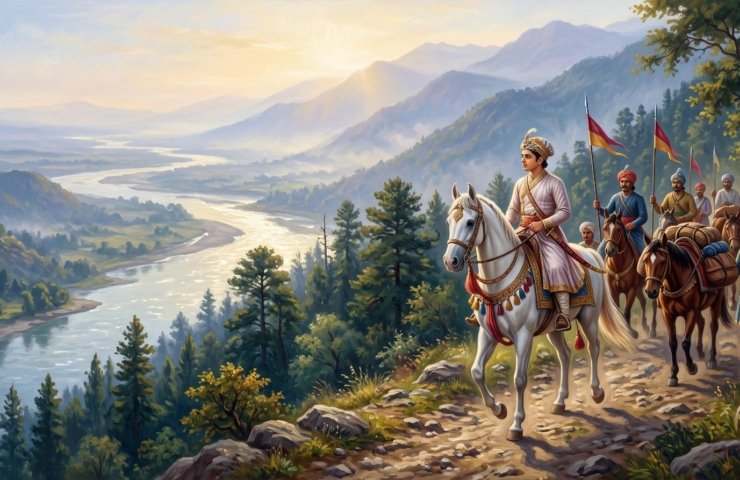
From Kangra to Bhimber
How a Katoch prince of Kangra founded the Chib line at Bhimber around 1400.
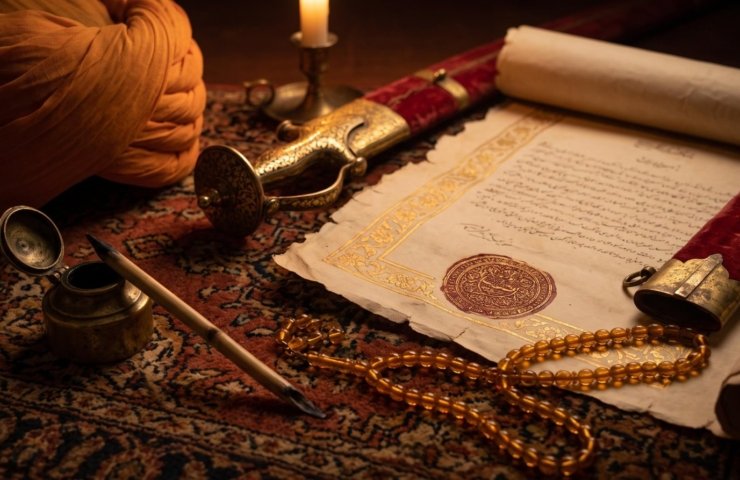
Baba Shadi Shaheed
The Chib raja who embraced Islam and became the father of the Muslim Chibs.
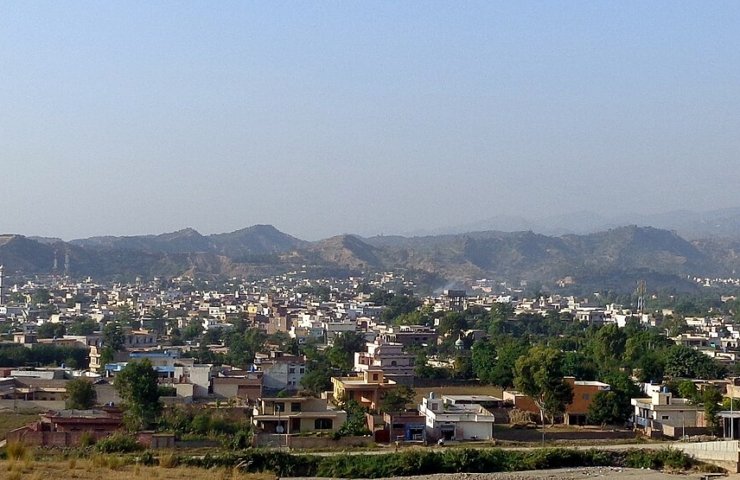
Gateway to Kashmir
Bhimber on the Mughal road: emperors, sarais and the death of Jahangir.
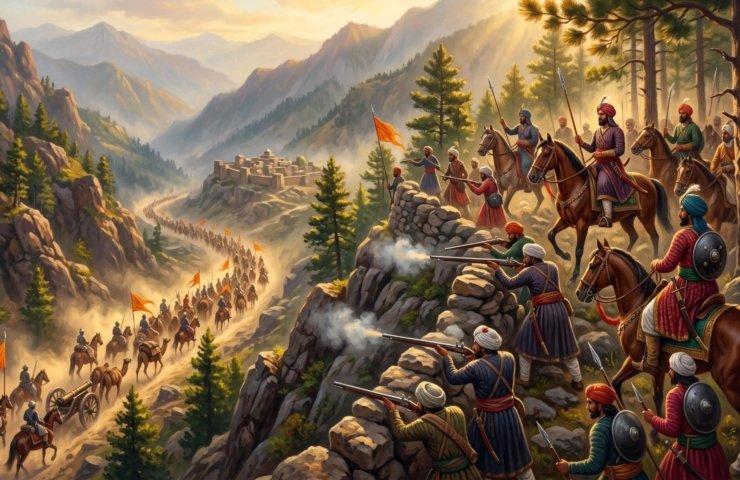
The Battle of Bhimber
1812: Raja Sultan Khan turns back the army of Prince Kharak Singh.
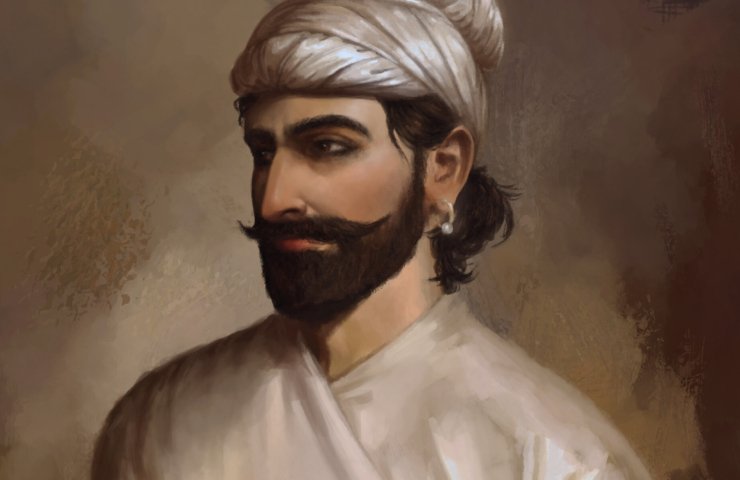
Raja Sultan Khan
The last ruler of Bhimber, who would not give up his country without a fight.
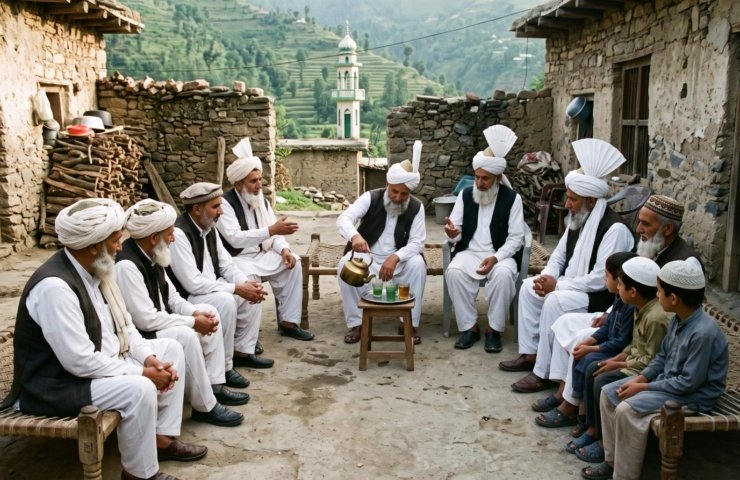
Customs and Traditions
Faith, lineage and the old order of the Bhimber kingdom.
Main sources: the Shajra-e-Nasab of the Chib Rajputs of Malot; J. Hutchison and J. Ph. Vogel, History of the Panjab Hill States (1933); and H. A. Rose, Glossary of the Tribes and Castes of the Punjab and North-West Frontier Province (1911).