

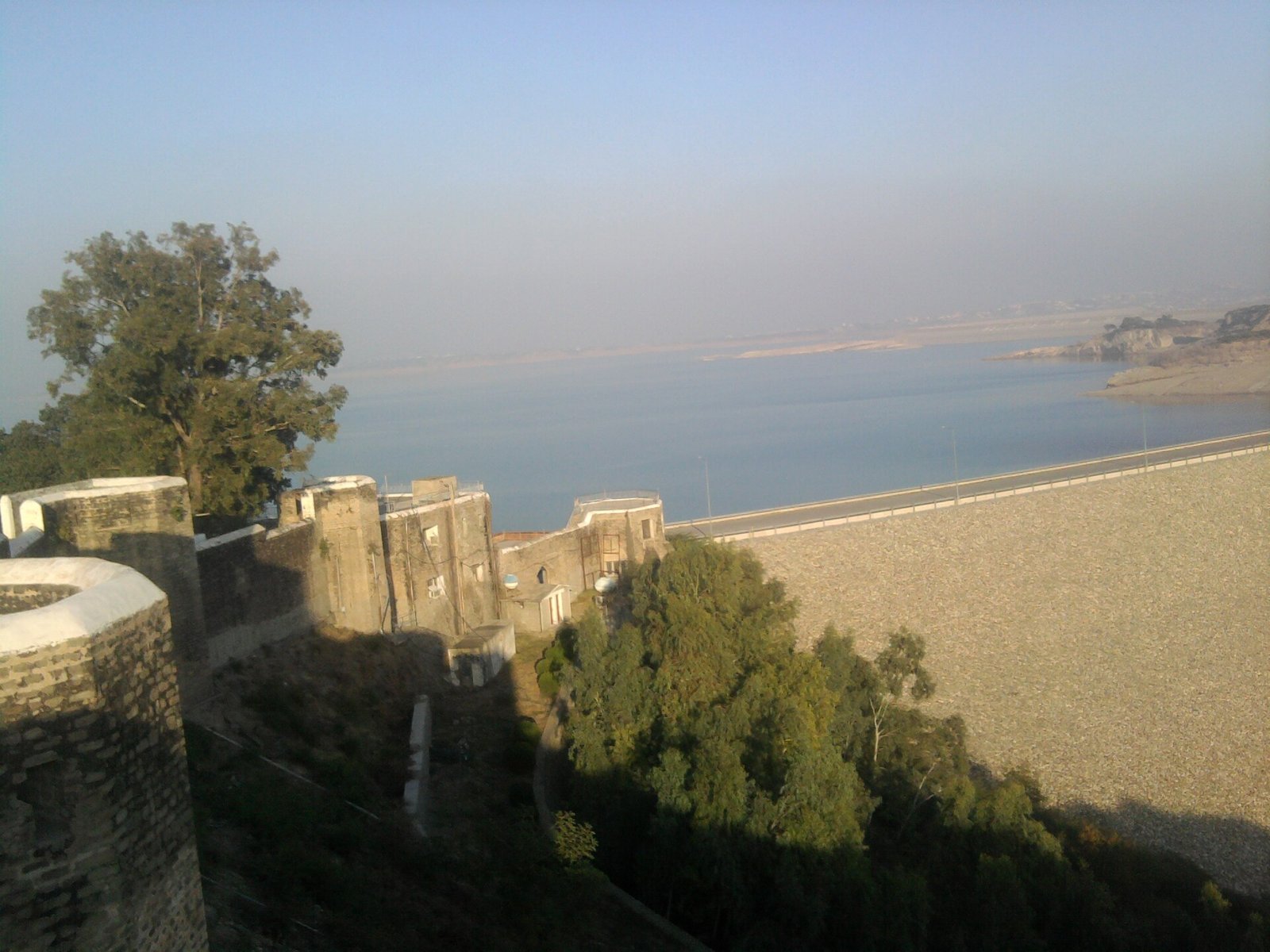
Mangla Fort crowns a hill beside the River Jhelum at Mangla in Mirpur District, where the river leaves the hills for the plains of the Punjab. Its position has made it a guardian of the routes into Kashmir since ancient times, and it is often called a gateway to Kashmir.
Capital of Khari-Khariali
According to the histories of the hill states, Raja Partab Chand of Bhimber divided his country between his two sons. The elder, Chib Chand, ruled at Bhimber, while the younger, Kharak Chand, founded the state of Khari-Khariali with its capital at Mangla Fort. For centuries the two Chib states stood side by side along the foothills. Kharak Chand does not appear on the Chibs’ own shajra, which follows the line of Chib Chand.
Mangla proved a hard place to take. At the end of the eighteenth century the Sikh sardars Sahib Singh of Gujrat and Mahan Singh Sukarchakia attacked the fort without success. Later, when Ranjit Singh marched into the hills and captured the fort of Chunian, its chief, Raja Umar Khan, withdrew to the stronghold of Mangla. In the end, judging resistance hopeless, he sought peace through his son Akbar Ali Khan, and half of the state was granted to Akbar Ali Khan. Members of the family continued to live in Mirpur District.
History of the fort
The fort is far older than the Chibs. Its earliest walls of stone and mud are thought to date from before the common era, and it was improved by the Gakhars in the early Mughal period. The building of the Mangla Dam in the 1960s flooded much of the old fort, and only five or six acres of its south-western part now stand above the water.
Visiting
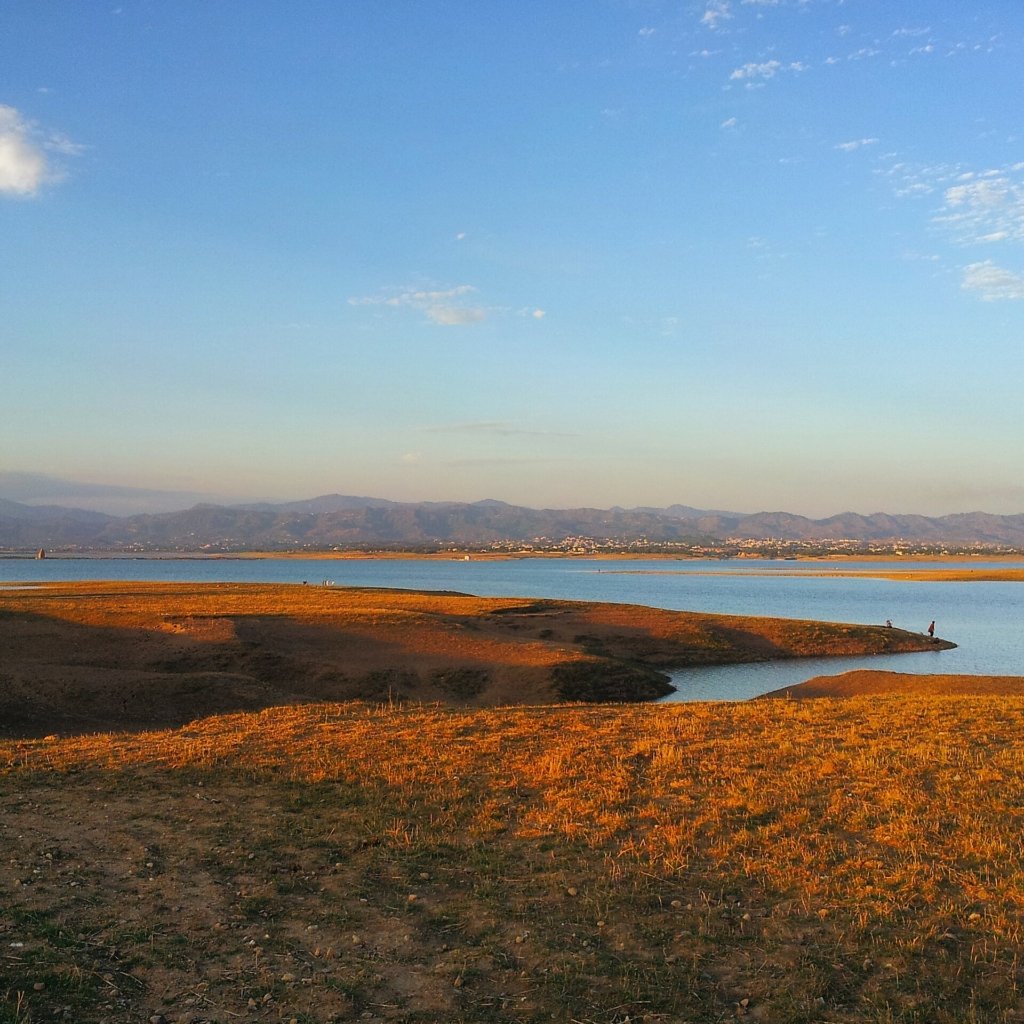
Mangla Fort is administered by the Pakistan Army and is not normally open to the public, but its silhouette above the great reservoir of Mangla Lake remains one of the landmarks of Mirpur.
Sources
- J. Hutchison and J. Ph. Vogel, History of the Panjab Hill States, vol. II (Lahore, 1933), “Bhimbar and Khari-Khariyali”, pp. 725–729.
- “Mangla Fort, a historical heritage”, Business Recorder, 17 January 2007.