

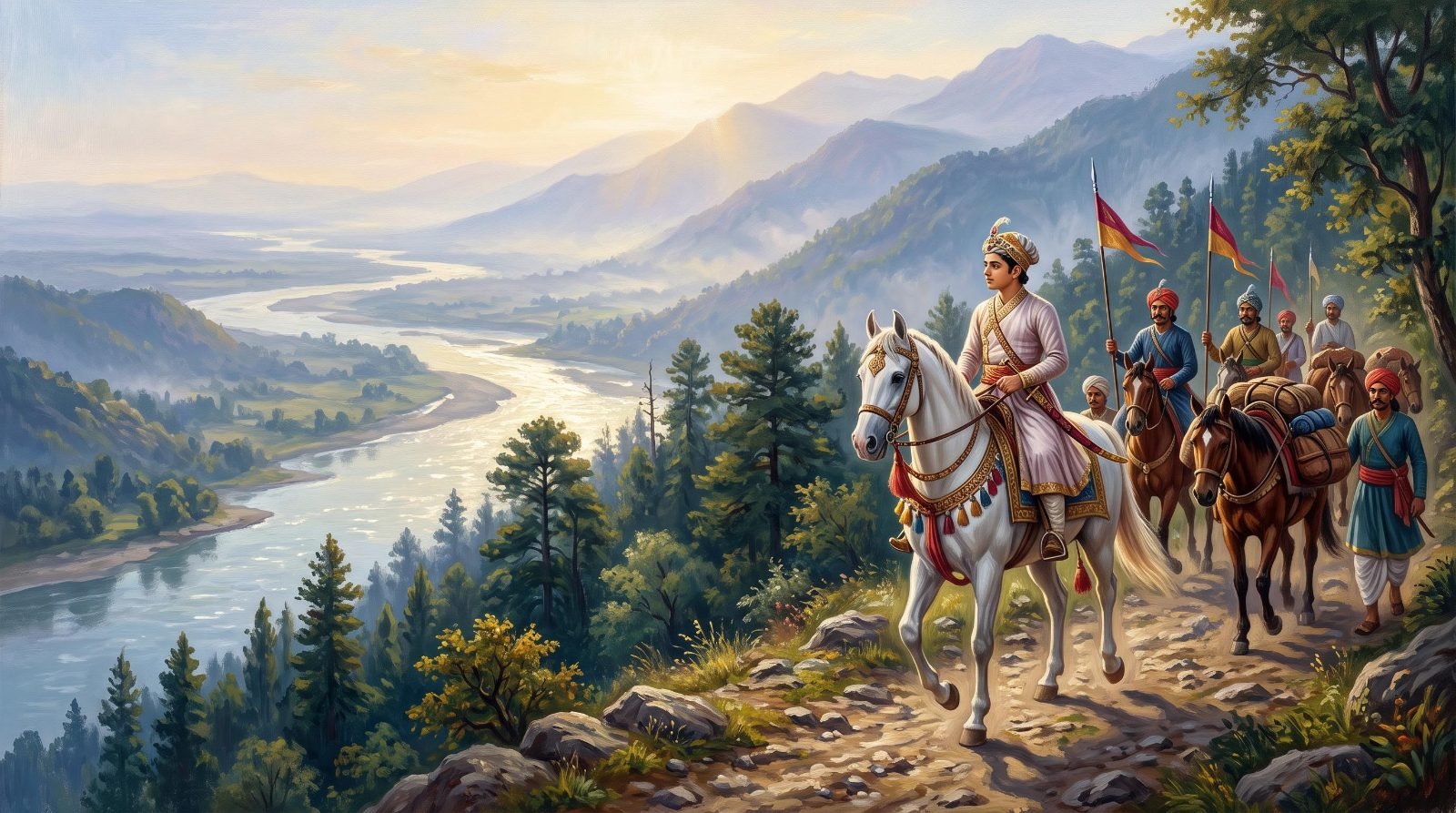
The Chib Rajputs descend from one of the oldest royal houses of the Himalayas: the Katoch rajas of Kangra. Katoch tradition, like the Chibs’ own shajra, traces the dynasty back to Rajanaka Bhumi Chandra, and for centuries the family ruled the hill kingdom of Trigarta, the country between the Ravi, the Beas and the Sutlej, from the great fort of Kangra, once known as Nagarkot.
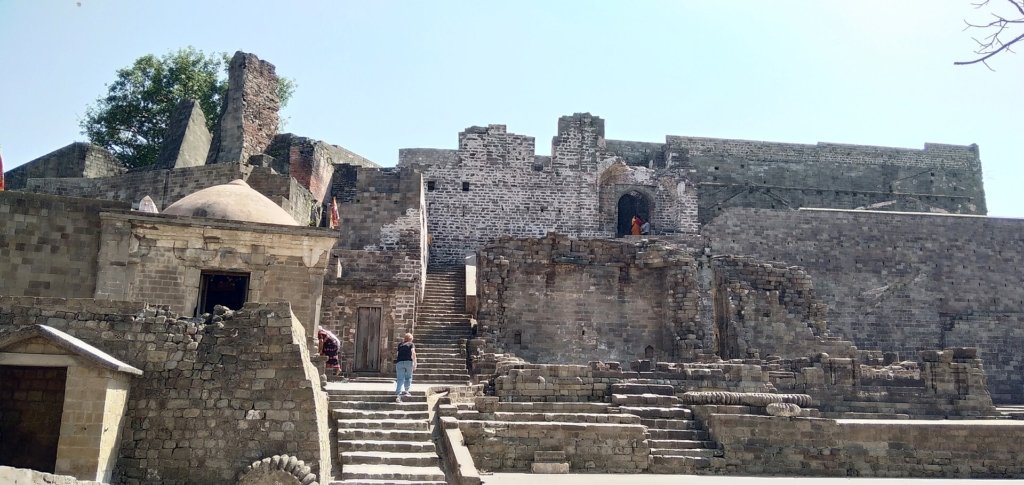
The Katoch rajas in our shajra
The shajra of the Chibs of Malot names fifteen rajas of Kangra, each with a date and the deed for which he is remembered, from Rajanaka Bhumi Chandra (c. 4300 BC) to Megh Chandra II (AD 1391). Among them are Susharma Chandra II, who fought against Arjun in the Mahabharata; Parmanand Chandra I, known as Porus, who fought against Alexander the Great; Udaivan Chandra, who fought against Ashoka and lost Multan; Adam Chandra, a contemporary of Harsh Vardhan of Kanauj, who was visited by the Chinese traveller Hiuen Tsang; Jagdish Chandra III, who fought against Mahmud Ghazni; and Shringar Chandra IV, who received the title of Miyan. The full list is on our Lineage / Family Tree page.
Three sons of Raja Megh Chand
The story of the Chibs begins around 1400 AD. Raja Megh Chand of Kangra, Megh Chandra II in the shajra, issued the Meghmudra coins and fought against Timur. The shajra gives him three sons: Hari Chandra I (AD 1405), who founded Guler; Raja Partab Chand, founder of Bhimber (Chibhal); and Karm Chandra II (AD 1420), who received the title of Bada Raja and issued the Karam mudra coins. The Kangra chronicles add that Hari Chand fell into a well while out hunting and was given up for dead, so that Karam Chand was crowned in his place. When Hari Chand was found alive, he founded the new state of Guler instead.
According to Hutchison and Vogel, Partab Chand was the third son and had no throne to inherit. As was common in those unsettled times, he set out at the head of his own force to win a kingdom. He first settled at a village called Malura on the plains near Bhimber, married the daughter of the local ruler, and in time succeeded him, making Bhimber his capital.
Chib Chand and the land of Chibhal
Partab Chand’s son Chib Chand, whom the shajra calls Raja of Chibhal State, Bhimber, became Raja of Bhimber, and from him the clan has always taken its name. Hutchison and Vogel record a younger son, Kharak Chand, who founded the neighbouring state of Khari-Khariali, with its capital at Mangla Fort on the Jhelum; he does not appear on our shajra, which follows the line of Chib Chand.
The hill country ruled by the Chibs had in ancient times been called Darvabhisara, a name found in the Rajatarangini, the old chronicle of Kashmir. After the coming of the Chibs it became known as Chibhal, the land of the Chibs, stretching along the foothills from the Jhelum towards Rajauri. Bhimber, the gateway to Kashmir, remained its capital from about 1400 until the nineteenth century.
One family, many branches
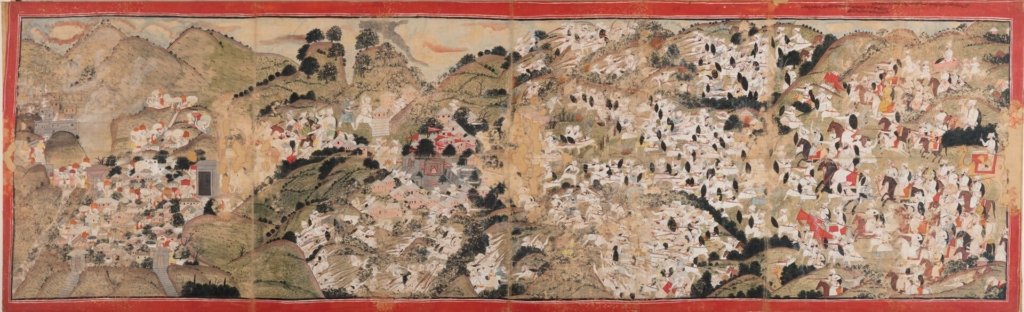
The Chibs’ own shajra-e-nasab preserves this descent: from Rajanaka Bhumi Chandra through the rajas of Kangra to Megh Chandra II, and from his son Raja Partab Chand to Raja Chib Chand and the rajas who followed him, Raja Kalas Chand, Raja Ropaal Chand, Raja Pheeri Chand, Raja Shaanti Chand and Raja Gor Paal Chand, father of Baba Shadi Shaheed. It is a lineage shared with the royal houses of Kangra and Guler. Explore it on our Lineage / Family Tree page.
Sources
- J. Hutchison and J. Ph. Vogel, History of the Panjab Hill States, vol. II (Lahore, 1933), “Bhimbar and Khari-Khariyali”, pp. 725–729.
- H. A. Rose, A Glossary of the Tribes and Castes of the Punjab and North-West Frontier Province, vol. II (Lahore, 1911), “Chibh”, pp. 169–170.
- Shajra-e-Nasab (family tree) of the Chib Rajputs of Malot, Azad Kashmir.