

Raja Buddhe Khan (راجہ بڈھے خاں), whose formal name was Raja Muhammad Zaman Ali Khan, was the Chib Rajput zaildar and jagirdar of Samahni, a valley now in the Bhimber district of Azad Jammu and Kashmir. According to the 1997 Chib history of Raja Muhammad Iftikhar Ali Khan, he led the Muslims of the Samahni valley in the 1931 Tahaffuz-e-Qur’an movement against Dogra rule, was arrested, tried at Naushehra and honourably acquitted, and in October 1947 helped free the area from Beri Pattan to Khariala.
At a glance
- Full name
- Raja Muhammad Zaman Ali Khan, known as Raja Buddhe Khan (also written Budhe Khan)
- Offices
- Zaildar and jagirdar of Samahni
- Home
- The Samahni valley, now Sub-Division Samahni, District Bhimber, Azad Kashmir
- Known for
- Leading the Samahni valley in the 1931 Tahaffuz-e-Qur’an (“protection of the Qur’an”) movement
- Trial
- Heard at Naushehra; defended by Naeem-ul-Haq, Advocate, appointed by Allama Iqbal; honourably acquitted
- 1947
- Helped free the area from Beri Pattan to Khariala in October 1947
- Family
- Younger brother Raja Fateh Khan; son Raja Zulfiqar Ali Khan
- Main source
- Iftikhar Ali Khan (1997), pp. 266–267, 332–334, 362–363
Raja Buddhe Khan, the zaildar of Samahni
Samahni is a valley in the hills of the Bhimber district of Azad Jammu and Kashmir, the region on the Pakistani side of the old princely state of Jammu and Kashmir; today it forms Sub-Division Samahni. Like much of the Bhimber country it is home to many families of the Chib Rajputs, and its leading Chib house traces its standing to Raja Hakim Khan, of the line of Raja Mal Khan, who received villages and a kot (fort) at Samahni in the reign of the Mughal emperor Aurangzeb; their story is told in The Samahni Chibs. The book does not set out Raja Buddhe Khan’s own descent in these pages, but it notes that the jagir he held had been granted by the Mughals (p. 333).
Raja Buddhe Khan held two kinds of standing. As jagirdar he enjoyed the revenue of a hereditary land grant; as zaildar he was the government’s appointed notable for a zail, a circle of villages in the revenue administration. The book calls him the very identity of the Samahni valley and a great lover of freedom, and says that, zaildar and jagirdar though he was, he made the support of oppressed and helpless Muslims the goal of his life (p. 332).
Timeline
- 1931 Leads the Samahni valley in the Tahaffuz-e-Qur’an movement; curfew, firing by Dogra troops and his arrest on a charge of rebellion
- After his arrest Tried at Naushehra and acquitted; his jagir confiscated, then restored by the court; his zaildari abolished
- 1932 Founding of the All Jammu and Kashmir Muslim Conference, for which his comrades worked in hiding
- October 1947 Helps free the area from Beri Pattan to Khariala from Dogra control
- After 1971 Still living: tells a devotee of a cure linked to the shrine of Baba Shadi Shaheed
Raja Buddhe Khan and the 1931 Samahni movement
In 1931 long-standing Muslim grievances against the Dogra government of Maharaja Hari Singh came to a head across Jammu and Kashmir. Incidents in Jammu that year, among them a reported insult to a copy of the Qur’an, and the police firing on a crowd outside Srinagar’s central jail on 13 July 1931, set off protests throughout the state. The book calls the movement in which Samahni took part the Tahaffuz-e-Qur’an Tahrik, the “movement for the protection of the Qur’an”.
Under Raja Buddhe Khan’s self-sacrificing leadership, the book says, the mujahids (fighters) of the Samahni valley played a revolutionary part, and the protest grew into a popular rising against Dogra rule. The authorities placed the valley under curfew, and when the Dogra army opened fire to crush the rising many people were killed and wounded. Raja Buddhe Khan was arrested on a charge of rebellion. The women of the Samahni valley then held large demonstrations against his arrest, and several of them were arrested in turn (p. 332).
The book sums up his part in a vivid image: under his leadership, it says, the oppressed Muslims of this corner of the state challenged the Dogra ruler at the very height of his power so boldly that the maharaja lost his sleep.
The Naushehra trial and the jagir
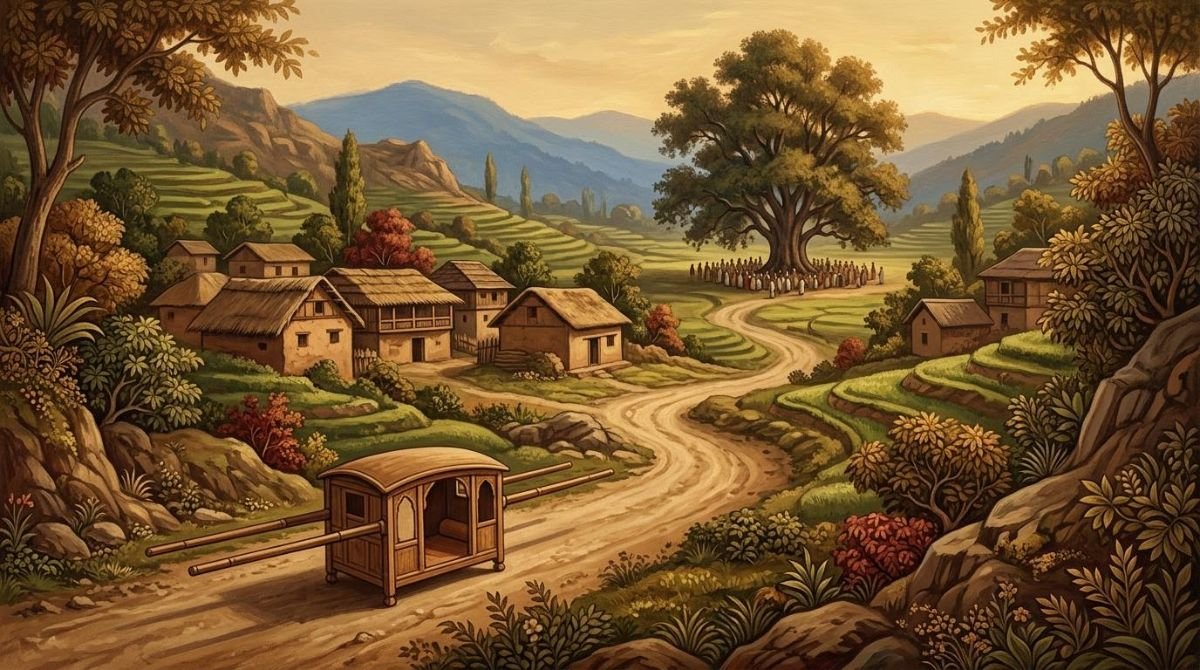
The cases against Raja Buddhe Khan were heard at Naushehra. The Muslims of Jammu and Kashmir turned for help to Allama Muhammad Iqbal (1877–1938), the poet-philosopher of Lahore, who took a close interest in the cause of Kashmir’s Muslims. Iqbal appointed Naeem-ul-Haq, Advocate, to conduct the defence, and such was the public feeling, the book records, that people carried the lawyer in a palanquin from Bhimber to Naushehra. The court found that the arrest had been made in bad faith and ordered his release: Raja Buddhe Khan was honourably acquitted (p. 332).
Acquittal did not end the pressure. His jagir was confiscated; the court later declared the confiscation orders illegal as well and had the jagir restored because, the book explains, it had been granted not by the Dogra government but by the Mughals. His zaildari, however, was abolished. The government then tried every inducement to win him over, but the book says no temptation could move him from his course (p. 333).
Comrades of 1931: Rahmdad Khan and Syed Muhammad Khan
The movement in the valley was not one man’s work. The book’s chapter on Mandi Ghawaliyan names Raja Rahmdad Khan, numbardar (village headman) of Ghawaliyan, as Raja Buddhe Khan’s “right hand”. Although he was himself a numbardar and so a servant of the government, he openly opposed the anti-Muslim measures of Maharaja Hari Singh and, in the book’s words, stood “like an iron wall” against the state’s repression in Ghawaliyan, Bandala, Samahni, Chowki and Bandi. Beside him, shoulder to shoulder, stood Raja Syed Muhammad Khan, numbardar of Bandi (p. 266).
After Raja Buddhe Khan’s arrest both men went underground and stayed in hiding for a long time, working for the All Jammu and Kashmir Muslim Conference, the party of the state’s Muslims, which the book dates to 1932. Raja Rahmdad Khan remained with the Muslim Conference until his death, and the book says the people of Ghawaliyan were still attached to it in its own day. The wider story is told in Chib Rajputs in Kashmir Politics.
October 1947
When revolt against Dogra rule broke out in the Jammu hills in the autumn of 1947, Raja Buddhe Khan took the field again. In the uprising of October 1947, the book records, he and his comrades freed the whole area from Beri Pattan to Khariala from Dogra control, a part it calls history-making in the war for Kashmir’s freedom (p. 333). His younger brother, Raja Fateh Khan, also played a prominent role in the October rising and the fighting that followed (p. 334).
His old comrade Raja Rahmdad Khan fought in the same campaign, with very scant resources, alongside Raja Muhammad Afzal Khan, zaildar of Bandala, Raja Kifayat Ali Khan, numbardar of Bandala, and others. The war cost his family dearly: his brother, Havildar Raja Sahibdad Khan of No. 6 Jammu and Kashmir Regiment, was killed on the Skardu front, and two other relatives, Raja Ali Akbar Khan and Raja Jhalla Khan, were killed by an armed band during the upheaval (pp. 266–267). As elsewhere in the Jammu region that year, families of every community suffered; the wider story is told in The Chib Rajputs in 1947 and The Liberation of Bhimber, October 1947.
Later years and a story from the shrine
Raja Buddhe Khan lived on for many years after 1947. The book’s tribute says that his light shone over the Samahni valley for “more or less half a century”, and it closes with a couplet that it attributes to Iqbal:
Those who die do die, but they do not perish.
— couplet quoted in Iftikhar Ali Khan (1997), p. 333
A misprinted date
The tribute on p. 333 says that Raja Buddhe Khan died in “August 1947”. This cannot be right: the same page describes his part in the fighting of October 1947, and another chapter (pp. 362–363) shows him alive after the prisoners of war of the 1971 India–Pakistan war had come home. The book does not give the correct year of his death.
That later chapter, a collection of testimonies about the miracles of Baba Shadi Shaheed, preserves a story that Raja Buddhe Khan told Maulvi Raja Wilayat Ali Khan. After the 1971 war, the story goes, a man from Gujrat district vowed a goat at the shrine of Baba Shadi Shaheed if his son came home from captivity in India. When the son returned, father and son set out for the shrine, then reached only by the long, exhausting climb up Aadhi Dhak. On the way the son lost patience and abused his father, and at once, devotees relate, his mind gave way. His companions turned back, and by the time they reached Bhimber his condition was so alarming that the police locked him up for others’ safety.
Raja Buddhe Khan happened to be in Bhimber that day. He went to the police station, heard the man admit that he had been insolent towards the saint, and told him to ask the Baba’s forgiveness through the intercession of Mai Sahiba Rani Thakial. The book records that the man did so, recovered completely, went straight on to the shrine and sacrificed two goats instead of one (pp. 362–363).
Family and the Samahni notables
The book names two members of Raja Buddhe Khan’s immediate family (pp. 333–334):
- Raja Fateh Khan, his younger full brother: a well-known social and political figure of the valley, through whose efforts many development projects were completed; popular in every biradari (kin community); prominent in October 1947; and president of the Tehsil Muslim Conference, Bhimber.
- Raja Zulfiqar Ali Khan, his son: a social and political worker of the Samahni valley and a former chairman of Union Council Chowki.
On the same pages the book lists other public figures of Samahni in the 1990s:
| Name | Public role recorded in the book |
|---|---|
| Major Raja Fateh Khan | Retired army major from a distinguished Samahni family (not the same man as Raja Buddhe Khan’s brother) |
| Professor Raja Manzoor Ahmad Khan | Educationist, long resident in England |
| Raja Abdul Rahman Khan | Matriculated from Government High School Bhimber in 1955; headmaster of the Government Pilot High School, Samahni; later District Education Officer, Azad Kashmir |
| Raja Rahmatullah Khan | Social worker; member of the advisory committee of the darbar of Baba Shadi Shaheed |
| Raja Latif Khan | Political and social worker; member of the same advisory committee |
Frequently asked questions
Who was Raja Buddhe Khan?
Raja Buddhe Khan, formally Raja Muhammad Zaman Ali Khan, was the Chib Rajput zaildar and jagirdar of Samahni in today’s Bhimber district of Azad Kashmir. The 1997 Chib history of Raja Muhammad Iftikhar Ali Khan presents him as the leader of the Samahni valley’s Muslims against Dogra rule in 1931 and a fighter in the uprising of October 1947.
What was the 1931 Tahaffuz-e-Qur’an movement in Samahni?
It was the Samahni valley’s part in the Muslim agitation that swept Jammu and Kashmir in 1931. Led by Raja Buddhe Khan, it became a popular rising against Dogra rule; the valley was put under curfew, troops opened fire, many people were killed or wounded, and he was arrested on a charge of rebellion.
Who defended Raja Buddhe Khan at his trial?
According to the book, the Muslims of Jammu and Kashmir asked Allama Muhammad Iqbal to arrange his defence, and Iqbal appointed Naeem-ul-Haq, Advocate. The case was heard at Naushehra, where the court found that the arrest had been made in bad faith and acquitted him.
What did Raja Buddhe Khan do in 1947?
In the uprising of October 1947 he and his comrades freed the area from Beri Pattan to Khariala from Dogra control, according to the 1997 Chib history. His younger brother, Raja Fateh Khan, also played a prominent part.
When did Raja Buddhe Khan die?
The book prints ‘August 1947’, but this is clearly a misprint: it also records his role in October 1947 and shows him alive after the 1971 war. The correct year is not given in the book.
Sources
- Raja Muhammad Iftikhar Ali Khan, Raja Shadab Khan alias Hazrat Baba Shadi Shaheed (Urdu, Barhang/Karachi, 1997), pp. 266–267, 332–334, 362–363.
- Testimony of Maulvi Raja Wilayat Ali Khan, as recorded in the book, pp. 362–363.
This article is part of our series based on the 1997 Chib history; see the book, chapter by chapter. Spellings of names follow the book.
Continue reading
Have a question about this history?
Our AI guide answers from the articles on this site, in English or Urdu.
