

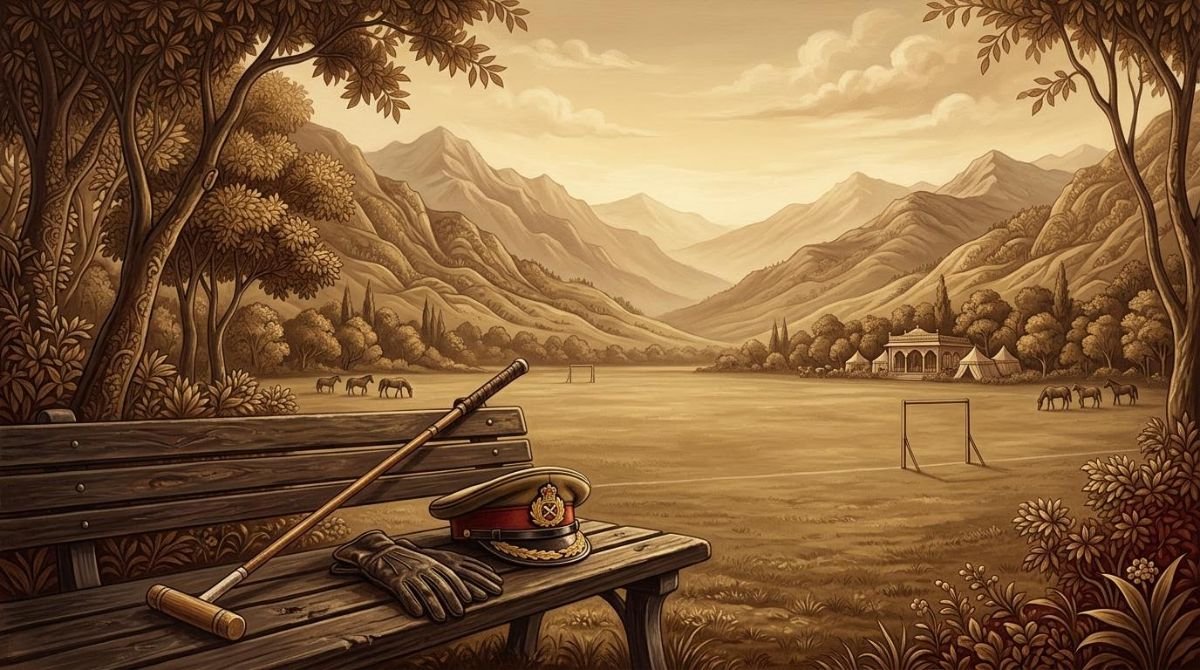
Major Raja Muzaffar Khan of Kotera Khanka (میجر راجہ مظفر خاں; died December 1978) was a Chib Rajput of the Khanka family of Khui Ratta, in the Banah Valley of Kotli, Azad Kashmir. A champion polo, hockey and football player, he served as ADC to Maharaja Hari Singh of Jammu and Kashmir, later became a zaildar, and in 1947 raised and first commanded the Darhal Battalion, later known as AK 16.
At a glance
- Home
- Kotera Khanka, Banah Valley, Kotli District, Azad Jammu and Kashmir
- Family
- Khanka Chib Katoch; son of Raja Faizullah Khan, jagirdar and zaildar, a sharer in the Khui Ratta jagir
- Service
- Jammu and Kashmir State army from the reign of Maharaja Partab Singh; Captain; ADC to Maharaja Hari Singh
- Sport
- Polo, hockey and football; a celebrated horseman
- Civil office
- Zaildar and numberdar
- 1947
- Raised the Darhal Battalion (later AK 16); fought on the Rajouri and Darhal Malkan fronts
- Died
- December 1978
Kotera Khanka and the Khanka Chibs
Kotera Khanka is a village of the Banah Valley, south-east of Kotli, and one of the homes of the Khanka Chibs, the branch of the Chib Rajputs descended from Raja Madan Khan of Bhimber and his Sudhan Rani. Family tradition says that it was near Kot Kotera that the widow of the murdered Khan Sa’id Khan hid to save her unborn son, Khan Muhammad Umar Khan, and that Umar Khan later returned there to take control of the area. Kotera Khanka was among the thirty-six villages of the jagir later granted to him, and his descendants still lived there in the 1990s; after the troubles of 1947 the chief jagirdar of Khui Ratta, Khan Inayatullah Khan, made his home there for a time.
Muzaffar Khan was the son of Raja Faizullah Khan, a jagirdar and zaildar who held a share in the Khui Ratta jagir. Following family custom he was taught Urdu, Persian, religious studies and the modern subjects of his day.
A soldier at the court of Jammu
After his education Muzaffar Khan joined the State army at the Jammu Durbar in the reign of Maharaja Partab Singh (r. 1885–1925). He was a big, immensely strong man and an outstanding footballer, hockey player and polo player. When Partab Singh died in 1925 and his nephew, Sir Hari Singh, came to the throne, the young officer found a patron. Hari Singh was himself a famous polo player, and he played polo, hockey and football with Muzaffar Khan. So close did they become that the Maharaja made him his ADC (aide-de-camp). He held the post for a long period, with the rank of Captain in the State forces.
He was not the only Chib in the Maharaja’s household: Raja Muhammad Wilayat Khan of Kasgumah, near Bhimber, also served Hari Singh as ADC.
The Alwar tournament
The book’s most memorable story about him comes from a sports tournament in Alwar, a princely state of Rajputana, where teams from many Indian states competed. When the other states’ players learned that Muzaffar Khan would play for Jammu and Kashmir, they protested strongly and demanded that he be left out of every Jammu and Kashmir team: as a horseman and as a hockey, football and polo player he was, the book says, dreaded by players all over India. Maharaja Hari Singh, who had travelled to Alwar for the finals, made it plain to every team that if Raja Muzaffar Khan did not play, no Jammu and Kashmir team would play and the state would boycott the whole tournament. The protest collapsed, he played, and according to the book Jammu and Kashmir won every event in which he took part.
Court jealousy and resignation
Hari Singh held him very dear, and Muzaffar Khan spent most of his time in the Maharaja’s company. That closeness, the book says, made enemies among the Hindu nobles of the court and even within the Maharaja’s own household, who began to turn the ruler against him. The author attributes their hostility to Muzaffar Khan’s devotion to Islam, for he was as well known for his piety and abstinence as for his sport, and to their fear that the friendship might draw the Maharaja himself towards Islam.
Whatever the cause, relations cooled. Muzaffar Khan resigned, but for a full year the Maharaja refused to accept his resignation, until he went home in protest and it was finally accepted. Hari Singh then ordered the officials concerned to make Captain Raja Muzaffar Khan a zaildar and to treat him with every mark of respect. He served thereafter as zaildar and numberdar of his area.
Raja Muzaffar Khan in 1947: the Darhal Battalion
In the war of 1947 in Jammu and Kashmir, which the book calls the Jihad for the Freedom of Kashmir, Muzaffar Khan played what the author describes as a weighty and history-making part. He raised the Darhal Battalion and fought on the Rajouri and Darhal Malkan fronts, across the mountains from the Banah Valley. He was its first and founding commander, and the battalion was later named AK 16, the 16th Azad Kashmir battalion. His successor in command was Major Abdul Aziz, who had been a Captain in Maharaja Hari Singh’s State army and retired from the Azad Kashmir Regular Forces as a Major.
His kinsman Khan Inayatullah Khan of Khui Ratta raised the Banah Battalion in January 1948. For the wider story see Subedar Khan Inayatullah Khan, The Chib Rajputs in 1947 and Chib Soldiers.
Character, family and death
The book describes Muzaffar Khan as devout, ascetic and God-fearing, a man of high morals to whom the grieving, the persecuted and the destitute turned for help, and who made obtaining redress for the oppressed his rule of life until his last breath. He had no son, a deprivation he accepted, the author says, as the will of God. His only daughter was the wife of Khan Muhammad Sarwar Khan, chief jagirdar of Khui Ratta, which tied him closely to the next generation of that house: Khan Iqbal Sikandar Khan and his brothers.
Sources differ
Through this marriage the book calls Iqbal Sikandar Khan and his brothers Muzaffar Khan’s bhanje, “sister’s sons”. As the sons of his daughter they would be his grandsons (nawase), so one of the two statements must be a slip.
Major Raja Muzaffar Khan died in December 1978. The author remembers him as the emblem of the glory of the Khanka Rajgan of Khui Ratta, the pride of the Banah Valley, an honour to his forefather Raja Shadab Khan, Hazrat Baba Shadi Shaheed, and the guardian of the good name of Kotera Khanka. At the Banah Valley’s Baisakhi fair, Jashn-e-Baharan, his name stands alone in the book’s list of unbeaten champions in polo, neza-bazi (tent-pegging), hockey and football.
Other notables of Kotera Khanka
The book closes its account with a list of other well-known people of Kotera Khanka, to which one more can be added from the same chapter.
| Name | Distinction recorded in the book |
|---|---|
| Zaildar Raja Muhammad Akbar Khan | Zaildar; an unbeaten champion of neza-bazi at the Banah Baisakhi fair |
| Raja Farooq Akbar Khan | Of Mirpur city; described as a proprietor (the book’s entry is cut short) |
| Raja Karamatullah Khan (late) | District Forest Officer (D.F.O.) |
| Raja Rafiq Arif Khan | Superintendent of Police, Azad Kashmir; son of Raja Karamatullah Khan |
| Colonel (retd) Raja Khalil Arif Khan | Army officer; son of Raja Karamatullah Khan |
| Raja Mumtaz Khan | Numberdar; son of Raja Murtaza Khan |
| Raja Shabbir Tabassum | Advocate of the High Court and Supreme Court of Azad Kashmir; former District Councillor, Kotli |
| Raja Afzal Anwar Khan | Member and chairman of the Union Council of Kotera Khanka (p. 248) |
Frequently asked questions
Who was Major Raja Muzaffar Khan?
Major Raja Muzaffar Khan of Kotera Khanka, who died in December 1978, was a Chib Rajput of the Khanka family of Khui Ratta in the Banah Valley, Kotli. He was ADC to Maharaja Hari Singh, a renowned polo, hockey and football player, a zaildar, and in 1947 the founder of the Darhal Battalion, later AK 16.
Was Raja Muzaffar Khan ADC to Maharaja Hari Singh?
Yes. According to the 1997 Chib history, Maharaja Hari Singh, himself a famous polo player, played polo, hockey and football with him and made him his ADC, with the rank of Captain in the State forces. He later resigned after jealousy at court soured their relations.
What happened at the Alwar tournament?
At an inter-state tournament in Alwar, other teams protested against Raja Muzaffar Khan playing for Jammu and Kashmir. Maharaja Hari Singh threatened to withdraw every Jammu and Kashmir team unless he played; he played, and the book says the state won every event he took part in.
What was the Darhal Battalion?
The Darhal Battalion was a unit raised by Raja Muzaffar Khan in 1947, which fought on the Rajouri and Darhal Malkan fronts. He was its first commander; it was later named AK 16, and Major Abdul Aziz succeeded him in command.
When did Major Raja Muzaffar Khan die?
He died in December 1978. He had no son, and his only daughter was married to Khan Muhammad Sarwar Khan, chief jagirdar of Khui Ratta.
Sources
- Raja Muhammad Iftikhar Ali Khan, Raja Shadab Khan alias Hazrat Baba Shadi Shaheed (Urdu, Barhang/Karachi, 1997), pp. 170, 202–206, 223, 231, 248, 254–257.
This article is part of our series based on the 1997 Chib history; see the book, chapter by chapter. Spellings of names follow the book.
Continue reading
Have a question about this history?
Our AI guide answers from the articles on this site, in English or Urdu.
